A wind turbine blade can stretch far above the ground, rotate in changing weather, and hide damage from a quick visual check. Robots give maintenance teams a safer way to inspect these structures and collect the same type of evidence from one visit to the next.
- Drones can view blade surfaces without sending a worker up the tower.
- Climbing robots can inspect areas that are hard to reach from the ground.
- Repeatable scans can help teams compare damage over time.
The work is difficult by design
Wind turbines place inspection work high above the ground and often far from roads, workshops, or large crews. A technician may need to reach the blades by rope, platform, or another access system before they can check a crack, loose surface, or damaged edge.
That work takes planning because the rotor must be stopped and the weather must allow a safe inspection. Wind, rain, poor light, and surface movement can all affect what a person can see and how they can reach it.
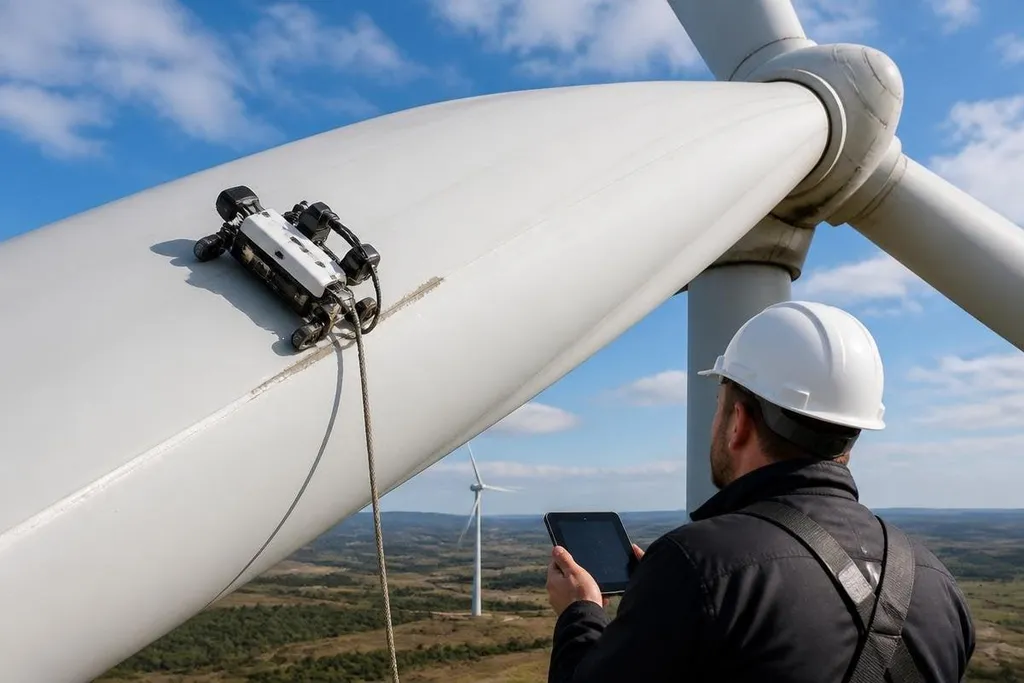
Robots change the first step. A drone can fly around the rotor and record images of the blade surface. A climbing robot can attach to the blade and move along it while carrying cameras or other sensors. The robot does not remove the need for a technician, but it can collect evidence before a person decides what repair work is needed.
Better records can mean better repair choices
An inspection is useful only when the images and measurements help someone make a decision. A single photo may show a mark on the blade, but a set of repeat inspections can show whether that mark is stable, spreading, or linked to a larger problem.
Robots can follow the same route or viewing angle on later visits. That makes comparisons easier, especially when a turbine has many blades or sits in a location that takes time to reach. The value comes from repeatable work, not from the robot name on the equipment.
A wind-farm manager needs more than blade images. Reports in wind turbine robotics coverage should name the machine, turbine, test date, and recorded defect. That record helps show whether the robot found a fault a technician can act on, rather than producing another set of images for a folder.
The data also needs a clear place in the maintenance process. A team may need to mark a defect, compare it with earlier images, send a technician to confirm it, and record the repair.
If the robot produces files that do not fit that process, the inspection may save a climb while creating more office work.
Where robots still fall short
A camera can find a visible surface defect, but it may not show the full depth of damage. Rain, glare, dirt, motion, and a poor viewing angle can reduce the value of an image. A drone may also need a skilled operator when the wind changes around the tower and rotor.
Climbing robots bring a different set of limits. They need reliable contact with the blade, a way to handle curved surfaces, and a safe response if power or communication fails. Their weight and movement can also affect which parts of the blade they can reach.
Inspection and repair are separate jobs. A robot may collect images or carry a sensor, while a trained person still decides whether a blade needs cleaning, patching, replacement, or another check. That decision cannot rest on a label such as “autonomous” alone.
I'd choose a robot first for repeat inspections and hard-to-reach surfaces, then keep a technician in charge of the repair decision.
A practical buying checklist
Before adding a wind turbine inspection robot, check these points:
- Inspection target: Decide if you need surface images, thermal data, measurements, or repair support.
- Access method: Confirm how the robot reaches the blade and what weather limits apply.
- Data record: Ask how the system stores images and compares them with earlier visits.
- Human check: Set the point where a technician must review or confirm a finding.
- Failure plan: Check what happens after a lost signal, low battery, sensor fault, or sudden weather change.
The best first use is usually narrow: inspect a defined blade area, record the result, and compare it with the next visit. That gives the maintenance team a clear test of the robot's value without handing over a repair decision it cannot make.